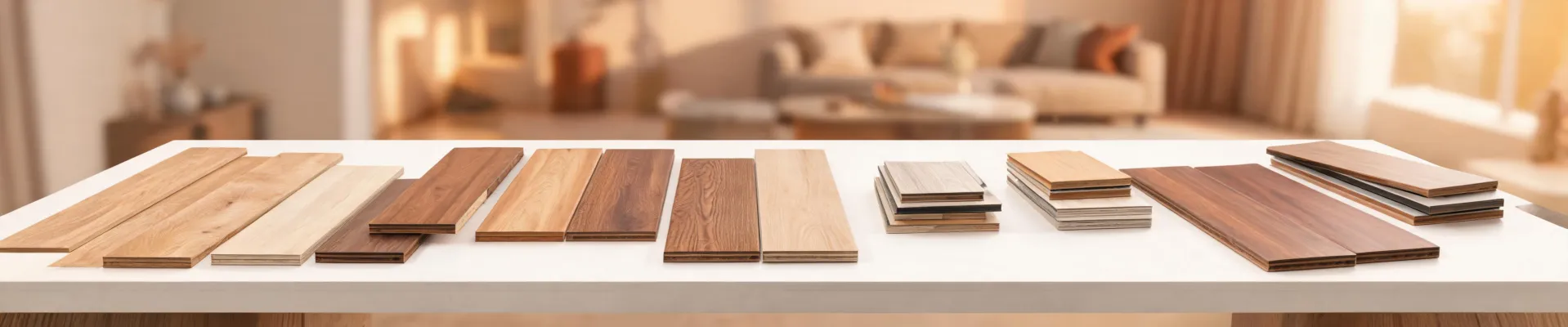
We bid out a two-building office renovation last spring. 14,000 square feet. Three floors. Mostly LVP, carpet tile in the open areas, ceramic in the wet zones.
We got three quotes back. Our GC, george j shaw construction, handled the subs—so we were comparing installation packages, not material brands. Quote A came in at $4.10 per square foot. Quote B at $4.35. Quote C—the certified shaw flooring installer—at $4.50.
We picked A. Saved $0.40 a foot. On paper, that's $5,600.
We overspent by $94,700.
I'll walk you through where that money went, because I've made this mistake before and I refuse to make it a third time.
The Number Nobody Should Have Trusted
Per-square-foot pricing is a proxy. It's one line out of twenty. When procurement folks like me compare $4.10 to $4.50, we're comparing a number that was already stale when it hit the bid sheet—and getting thinner every time the contractor pads it with assumptions.
Worse: the cheaper the quote, the more it depends on omissions.
Nobody puts "things we didn't include" at the top of a bid. They put them at the bottom, in a footnote, in 9-point font. Or they don't put them anywhere at all and let the change order do the talking.
The Problem Isn't the Header Price. It's Everything Underneath the Header Price.
Here's what took me about four years and two bad contracts to internalize: the flooring material is almost never the expensive part. The expensive part is everything the material sits on, bonds to, transitions against, and gets covered by—and none of that lives in the flooring line item.
Every flooring spec drags a tail of secondary purchases:
Underlayment. Carpet and LVP both need it. Underlayment comes from a floor underlayment manufacturer that has nothing to do with your flooring brand. Different MOQ, different lead time, different warranty language. If the underlayment density or load rating doesn't match the flooring spec, your warranty is void before the first box is opened.
Adhesives. Tile adhesive pricing moves separately from tile pricing. A tile adhesive distributor will quote you per bag, not per square foot, and the coverage math depends on trowel size and substrate porosity—two things that don't show up in a bid sheet until someone's mixer is already running. Get this wrong and you're looking at hollow spots and popped tiles six months down the line.
Coatings. Commercial hard surfaces in wet or transitional areas need elastomeric coatings, which is a whole separate buying category. Yeah—I didn't know there was an elastomeric coating distributor buying guide either, until I needed one. That's another vendor, another spec sheet, another compliance check.
Then the boring stuff nobody bids, but everybody pays:
Subfloor prep (self-leveling, patching, moisture mitigation). Transition strips. Demolition and disposal. Freight and staging—because you can't stack 14,000 square feet of product in the elevator lobby. Installer labor, which is quoted per square foot until it isn't. Warranty registration, which is worth exactly zero if any of the above went sideways.
Most buyers focus on the per-unit price and completely miss the accessories and prep that can add 25-40% to the actual project cost. The question everyone asks is "what's your rate?" The question they should ask is "what's not in this rate?"
What the $94,700 Actually Looked Like
I pulled every invoice from the job and reconstructed the overruns. Fair warning: these are our project numbers at our scale. Yours will differ.
- Self-leveling subfloor prep: +$18,200. The bid assumed roughly 1,800 square feet of patch. We needed about 4,100.
- Underlayment swap: +$11,400. The contractor's original underlayment couldn't meet the load rating for the LVP spec. We had to switch to a different floor underlayment manufacturer mid-project and eat a week of schedule.
- Tile adhesive failure: +$6,800. Wrong adhesive class for one of the porcelain types. Two restrooms had to be re-laid.
- Transition strips: +$9,600. 140 thresholds at $68 installed. Never bid, never budgeted.
- Elastomeric coating for wet-adjacent spaces: +$14,500. Patio entries and break rooms. Not in scope.
- Expedited freight: +$7,300. Three shipments flew because the primary supplier went out of stock.
- Demo and disposal: +$15,700. The GC's proposal said "included in construction budget." It was not included in construction budget.
- Punch and reinspection labor: +$11,200. Cleanup, touch-up, delays.
That's $94,700. Roughly half of it—prep, underlayment compatibility, adhesive spec, demo—was predictable if we'd scoped it properly. Only freight expediting and the delayed punch really caught us off-guard.
I still kick myself over the demo line. If I'd made the GC put "demo and disposal: $0.00, included" in writing on the bid sheet—or strike it and add a real number—we wouldn't have had a $15,700 surprise two weeks before mobilization.
The lesson isn't "spend more." The lesson is: a bid is not a cost. A bid is a wish list. The cost is what it takes to get the floor installed, warrantied, and signed off—on all of those things, not just the surface layer.
What I Do Now
Three changes. That's it.
One: I bid the manufacturers, not just the installers. If your flooring flows through a general contractor, you're buying at whatever markup the GC negotiated. Commercial accounts—Shaw flooring included, if that's your spec—often have a direct path that cuts 8-12% off the same material. Same product. Different channel. Different number.
Two: I run a standing crossover checklist on every flooring bid, no exceptions.
Subfloor prep scope. Underlayment manufacturer named. Adhesive class specified. Elastomeric coating or moisture mitigation called out. Transitions measured by linear foot. Demo and disposal line item. Freight and staging terms. Warranty registration process.
If a contractor can't answer these in the bid, the bid is fiction.
Three: I've stopped pretending I know everything that goes under the floor.
I don't assess slab flatness. I don't pick adhesive classes. I've tried—badly—and paid for it twice. The vendor who says "this isn't our strength—here's who handles it better" earns my trust on everything else. The vendor who claims to do it all is the one I stop answering.
There's a version of this job that's a spreadsheet. And there's a version that's a relationship with specialists who know their lane. I've been trying the second one for two years now. Overruns on my last three projects: under 6%.
Slower on the front end. Cheaper on the back end. I'll take that trade every quarter.
My experience here is based on roughly a dozen commercial flooring jobs in the $200K-$500K range. If you're running retail rollouts at national scale or doing single-family residential work, your math will look different. I can't speak to how this applies to either.