-
What to look for in a vinyl flooring supplier: an admin buyer's honest FAQ
-
1. What's the biggest mistake buyers make when picking a vinyl flooring supplier?
-
2. Shaw flooring vinyl plank — is the named brand actually different?
-
3. Is laminate flooring the same category as LVP?
-
4. Ceramic tile private label — is that a real option or just marketing?
-
5. So what should you actually look for in a vinyl flooring supplier?
-
6. For a space customers actually walk through, is the branded product worth it?
-
7. A quick word on pricing, because someone always asks
What to look for in a vinyl flooring supplier: an admin buyer's honest FAQ
I'm not a flooring installer and I'm not a specifier. I'm an office administrator for a 185-person company. I handle the ordering for every physical space we own — five offices and a warehouse — roughly $310,000 a year across eight or so vendors. Flooring is only one line on that list, but it keeps coming back.
Over the last 18 months I've replaced carpet in two lobbies, spec'd LVP for a break room, and priced out laminate flooring for a training room we never actually built. Along the way I made one expensive mistake and a couple of calls I'm still proud of. These are the questions I wish someone had answered before I started.
1. What's the biggest mistake buyers make when picking a vinyl flooring supplier?
Treating the supplier as the product. I used to assume all LVP was roughly the same and the only real variable was price. That's how I ended up, in 2023, with a batch of planks showing visible pattern repetition every fourth tile — in a space our CEO walks through daily.
Everything I'd read said "compare on cost per square foot." In practice, comparing on cost alone is how you buy a floor you can't un-install without tearing it out. What you need to know: the supplier's job is to solve your spec problem, not to sell you a SKU. If they can't quote wear layer thickness, pattern repeat, and pack coverage for the exact run, they're a reseller, not a supplier.
2. Shaw flooring vinyl plank — is the named brand actually different?
I went back and forth on this for almost three weeks. On paper, a cheaper house-brand plank covered the same square footage for roughly 30% less. The Shaw flooring vinyl plank I eventually specified cost more, and I couldn't point to a single spec-sheet line on day one that justified the gap.
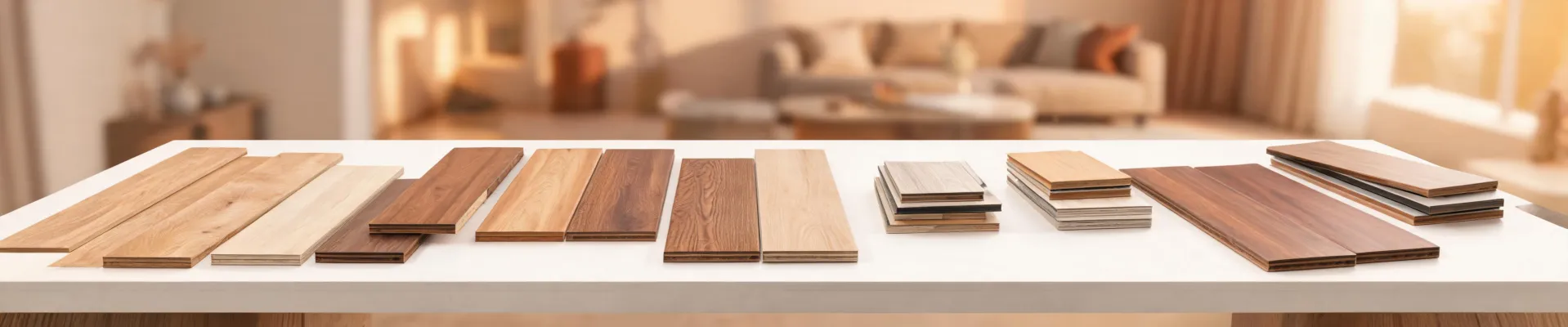
What changed my mind was seeing them side by side two years later. The lobby with the branded plank still looks like install day. The secondary entry with the cheaper option has scuffed wear patterns exactly where people turn the corner. When I compared the two entries side by side, I finally understood why the Shaw flooring premium isn't really a premium — it's the cost of not redoing the job in year two.
"The most expensive floor is the one you replace early." — advice I ignored once, and won't again.
3. Is laminate flooring the same category as LVP?
No, and I want to be careful here, because laminate flooring is genuinely solid for the right application. It's usually cheaper per square foot, it resists scratches better than most people assume, and it photographs beautifully in dry interior offices.
LVP — including the Shaw flooring vinyl plank we've used — is the cleaner choice for break rooms, entries, and any space with a plausible moisture event. I'm somewhat skeptical of the "100% waterproof" label on any category, but the practical gap between laminate and LVP in wet-traffic spaces is real and I've now watched it play out twice.
The rule I keep coming back to: laminate for dry, controlled spaces. LVP for anywhere a mop bucket might eventually drip.
4. Ceramic tile private label — is that a real option or just marketing?
Ceramic tile private label is one of those things admin buyers hear about and don't quite know what to do with. It's legitimate — manufacturers will produce tile under a distributor's or your own brand. But it only pays off above a certain volume, and savings get eaten by minimum order quantities if you're not careful.
For our scale (a few hundred square feet at a time), the math doesn't get there. For a distributor or a contractor buying pallets monthly, it can. If someone is pitching ceramic tile private label for a single-office build-out, they're either trying to lock in a relationship or they don't understand your volume.
5. So what should you actually look for in a vinyl flooring supplier?
My short list, refined across four vendor switches in 18 months:
- Can they quote the whole system? Plank, underlayment, adhesive or click system, trim pieces. A supplier who only knows the plank will leave you sourcing the rest the week before install.
- Can they provide a spec sheet, not just a sample? Pattern repeat, wear layer in mils, warranty terms, install requirements — in writing.
- Do they stand behind dye-lot matching on reorders? A 200 sq ft patch job we did in 2024 arrived visually mismatched because the supplier couldn't confirm the production run. Cost us the delivery plus a partial redo.
- Can they send the right invoice? Sounds petty. It isn't. In 2022 I switched to a new vendor because their quote was better, and their "invoice" was a handwritten receipt. Finance rejected the expense report and $2,400 came out of my department budget. I verify invoicing capability before placing any order now, no exceptions.
- Do they know the compliance side? Flammability ratings, indoor air quality, project-specific requirements. Commercial flooring has paperwork attached — if they can't speak to it, they're not the right supplier.
6. For a space customers actually walk through, is the branded product worth it?
I used to think of flooring as a facilities line item. It isn't. It's the first thing visitors look at, the thing they walk on for the entire meeting, and it quietly tells them something about how the company runs.
When we upgraded the main lobby from builder-grade plank to a better spec, I'm not going to claim client scores jumped 20%. That would be made up. What I can tell you is our facilities manager stopped fielding scuff complaints, and the room has held up two years without patching. The roughly $3,000 difference didn't register anywhere else in the budget in a painful way.
Granted, not every room deserves the premium option. Back-of-house and secondary entries are fine with mid-tier product. But the corridors clients walk through? Spend the money.
7. A quick word on pricing, because someone always asks
LVP in the U.S. typically lands somewhere around $2 to $7 per square foot at retail, with commercial-grade and full-system supply (plank plus underlayment and trim) pushing toward the upper half (based on publicly listed prices from major U.S. flooring retailers, January 2025; verify current pricing). Laminate flooring tends to run $1.50 to $5. Ceramic tile swings widely by format and finish.
Prices as of January 2025; verify current rates. These are the lines I now put into our budget proposals so finance doesn't come back asking why two rooms of the same size cost different amounts.
That's the whole list. I don't have a tidy conclusion — the last question is the conclusion. If you're an admin buyer staring at your first serious flooring decision, start with question 5 and work backward.