Why I'm Writing This Comparison
In my role coordinating rush orders at a building materials distributor, I've handled 200+ emergency supply requests in five years—including same-day turnarounds for contractors facing Monday morning inspections. I've learned one thing the hard way: the trim you choose isn't just a design decision. It's a scheduling decision.
So I'm putting woodgrain PVC trim up against traditional wood, and in some corners, against other alternatives. Three dimensions: delivery speed, durability and maintenance, and indoor applications. The goal isn't to crown a winner—it's to help you pick right for the job in front of you.
"When a contractor calls me at 4 p.m. on a Thursday because their fascia order arrived wrong, the material choice was made weeks earlier. The problem started at selection, not delivery."
Dimension 1: Delivery Speed — "Waiting on Wood" vs. "Off the Shelf"
Here's the thing about traditional wood trim: it's not a shelf item in most markets anymore. Cedar and high-grade pine often need to be ordered, and lead times stretch from 5 to 15 business days depending on the species and profile. If you need a non-standard dimension, add another week. I've watched contractors build a whole schedule around a lumber delivery that showed up a day late—and that one day cascaded into a $3,200 overtime bill for the install crew.
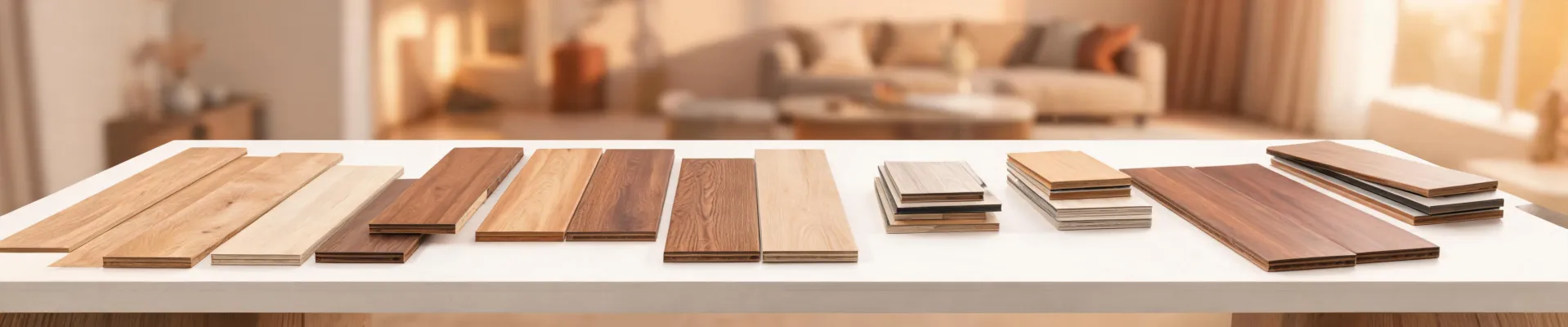
Woodgrain PVC trim behaves differently in the supply chain. Standard profiles are stocked regionally. In my experience, 80% of common trim and fascia profiles ship same-day or next-day from distribution centers. Custom colors and woodgrain textures vary—check lead times—but the base material doesn't sit on a boat from overseas.
The comparison result: If your schedule is tight, PVC wins on speed. Not because wood is slow in principle, but because wood supply chains are thinner than most people realize. If you need a custom wood profile from a mill, you're looking at 2-4 weeks. That's just reality.
I'll admit I got burned on this in 2023. We quoted a client a two-week window on a cedar fascia order, and the mill bumped us for a larger account. We ended up paying $680 in express freight to make the deadline. That's when our company started recommending PVC for anything inside a 10-day window.
Dimension 2: Durability and Maintenance — The Counterintuitive Math
Every supplier says their product is "low maintenance." That word is doing a lot of work. Let me be more specific.
Traditional wood needs repainting or resealing every 2-4 years in most climates. That's not a knock on wood—it's just the material's nature. A contractor friend of mine budgets one repaint cycle over a 10-year span for cedar siding: roughly $4,000-$6,000 for a mid-size house, depending on labor.
Woodgrain PVC trim doesn't need paint to protect the substrate. It won't rot, and it doesn't attract termites. But—and this is where the marketing gets fuzzy—it does need cleaning. Dirt accumulates. In coastal areas, salt spray leaves a film. The "zero maintenance" claim is a red flag in my book. Not zero. Lower, yes.
The counterintuitive part: Over a 10-year window, PVC trim often costs more upfront but less in total. Over a 3-5 year window, wood can actually be cheaper. My own team ran the numbers last quarter: for a 2,400 sq ft commercial facade, the crossover point was about 6.5 years. If you're selling the building before then, wood is fine. If you're holding it, the math shifts.
I still second-guess myself when I recommend PVC for a heritage-style renovation. The texture is good—genuinely convincing—but a woodgrain adhesive vinyl or a high-end composite trim won't match true aged cedar grain. We tell clients that upfront. If authenticity is the priority, wood wins. If timeline and long-term cost are the priority, PVC wins.
Dimension 3: Indoor Applications — Cabinets, Windows, and Where Each Option Fits
This is where I see the most confusion among contractors and DIY clients. Three different products get mixed together: woodgrain PVC trim, woodgrain adhesive vinyl, and stained glass window film. They solve different problems.
Cabinet refinishing: paint vs. vinyl wrap
If you're searching "how to paint kitchen cabinets," you probably haven't considered woodgrain adhesive vinyl as an alternative. Here's the honest comparison. Painting requires sanding, priming, two coats minimum, and a 2-3 day cure window. Vinyl wrap installs in hours if the cabinet faces are flat and clean. But paint handles textured profiles and complex moldings better. Vinyl struggles around ornate raised-panel doors.
My recommendation: flat or shaker cabinets—vinyl is a solid option. Raised panel or detailed millwork—paint. Neither is universally "better." I've seen vinyl peel at the edges after two years in a humid kitchen because the installer skipped the primer step. I've also seen paint jobs that looked worse because someone rushed the cure time.
Windows: woodgrain film vs. stained glass window film
Stained glass window film solves a privacy problem. Woodgrain window film solves an aesthetic problem—matching interior trim or blocking an ugly view with a wood-tone texture. Don't compare them on the same criteria. If you need privacy without curtains, stained glass film is the practical choice. If you need a wood-look accent on a glass partition, woodgrain film does that.
Where people go wrong: applying either film to textured or low-E glass without checking compatibility. I've handled three return requests this year alone from contractors who installed film on factory-tinted windows and ended up with bubbling. Read the spec sheet. It takes five minutes.
When to Choose Which
No universal winner. Here's how I'd break it down for a real project:
- Tight deadline (under 10 days): Woodgrain PVC trim. Stock availability beats custom milling every time.
- Heritage or high-end visible trim: Traditional wood. The texture and character still matter to buyers and inspectors.
- 10-year hold on a commercial property: PVC trim. The maintenance savings outweigh the upfront premium.
- Flat-panel kitchen cabinets, fast refresh: Woodgrain adhesive vinyl. But verify the substrate first.
- Privacy on glass: Stained glass window film. Different product, different job.
One last thing. I've seen contractors try to save $200 by switching trim suppliers mid-project—like they were buying a DoorDash gift card at the last minute. It never works. Trim profiles from different manufacturers don't align, colors don't match, and you spend more in labor than you saved on material. Pick your supplier early. Stay with them through the project. The supply chain rewards consistency, not last-minute deals.
That's the comparison. Now you know what I'd tell a contractor who called me at 4 p.m. on a Thursday.