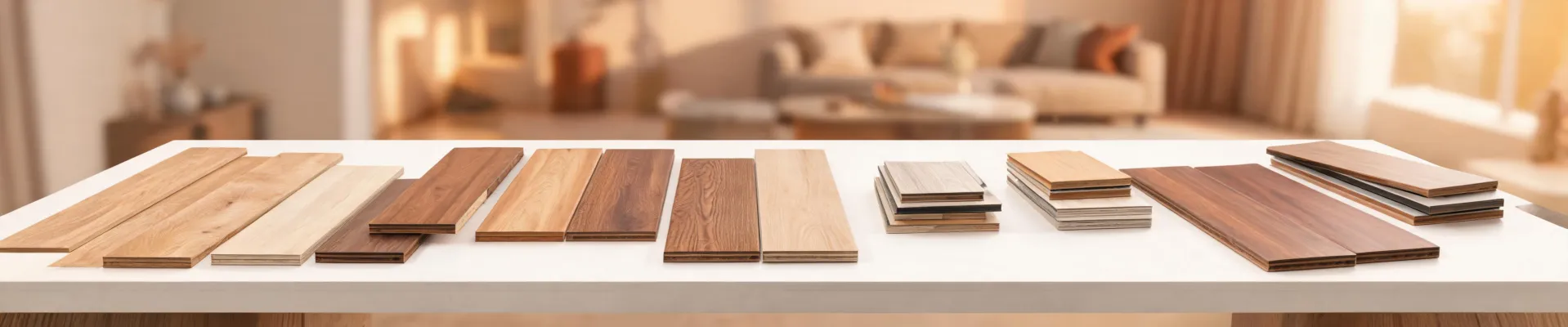
I still have the spreadsheet. Eleven years of procurement for a regional flooring and building materials distributor, 14 orders that went sideways, and roughly $96,000 in rework, emergency freight, and write-offs I can still point to by line item.
I don't keep the record as a badge of honor. I keep it because the mistakes rhyme.
Almost every one of them started with a quote that was 6–9% cheaper than the next one — which is exactly the kind of number that gets you a handshake and a "nice work" from whoever signs the POs.
Here's what I got wrong for the first five years, and what I finally understood about why the cheap quote keeps winning.
The problem I thought I had
For a long time I was sure my problem was price. We'd lose a job, I'd pull the losing bid, and I'd compare the flooring line item. We were 2.7% high on a 30,000 sq ft job. Fix that and we win. Right?
In February 2023 that logic produced the most expensive mistake on my list. We bid a 22,000 sq ft tenant improvement: commercial-grade laminate in the corridors, engineered wood in the executive suite, about 4,000 sq ft of tile in the break room and restrooms. I underwrote the whole thing at $3.12/sq ft on the flooring line to beat a competitor I knew was sitting at $3.29.
We won. Eight months later I was standing in that corridor with the property manager, looking at lifted seams and 4,100 sq ft of material that had to come out.
The problem I actually had
It wasn't the price. It was that I was buying a number instead of a specification.
That sounds like a slogan. It isn't. Let me break down what actually happened, because I think the same three things are happening on a lot of flooring and materials orders right now.
Nobody on the buying side actually reads the submittal package
The laminate we used was rated for residential and light commercial. The corridor it went into carried rolling loads — delivery carts, a floor scrubber, and, per the property manager, "occasional" pallet jack traffic. That's a different product category.
I knew that. What I didn't do was write it down and force a decision before the PO went out. The spec sheet was in the package. Nobody read it. That's not a supplier failure — that's a process failure, and I owned the process.
To be clear about this: nobody misled anyone. The data was right there on the page. I treated the submittal package as a formality instead of the actual contract.
The catalog is not the product
This is the one that took me longest to internalize, and it's the one I see distributors get wrong constantly.
There's an old belief that if the brand name on the box is the same, the product is the same. That was true 15 years ago, when a brand typically ran one plant per product line and a SKU meant one thing. It isn't true now. Brands run multiple plants, licensing arrangements, and regional sourcing. Same SKU, different run — different lock profile tolerance, different face veneer.
We got burned on engineered wood because of exactly that. The client wanted a floor they could refinish once, roughly ten years out, so I specified "engineered hardwood" and let price make the decision from there. What I didn't check was face veneer thickness — the number that actually determines whether you can sand and refinish the floor at all.
Quote A had a thicker wear layer and cost $0.22/sq ft more. Quote B saved us $3,700 on the order. Looking back, I should have paid the $0.22. At the time, the client's "we'll never refinish it, we'll just replace it" sounded credible. It wasn't — three years later a tenant improvement request landed on my desk and suddenly "just replace it" had a number attached.
The lesson isn't "buy the thicker veneer." The lesson is that when a consensus standard governs the product's long-term capability — ANSI/HPVA HP-1 for hardwood plywood and engineered wood, ANSI/NALFA LF 01 for laminate, ANSI A137.1 for ceramic tile — the number on the standard is part of the specification. Price doesn't get to overrule it. I also stopped skimming submittals on the Shaw engineered wood floors we stock, because those packages are long for a reason and the answer is usually buried on page four.
The line items everyone rounds off
Adhesive and sealant. If you asked me to name the two categories where distributors lose the most money per dollar of material, it's those two — and they're the two that never make the agenda.
Bulk tile adhesive coverage. Every bag has a stated yield. That yield assumes a specific trowel notch and a reasonably flat substrate. On a slab with normal deflection, I've measured coverage shortfalls of 30–40% against the bag number. On that restroom job I ordered 240 bags off the chart. We needed 370. The emergency freight on 130 bags cost more than upgrading the entire 4,000 sq ft from mid-grade to premium adhesive would have.
Sealant. I once let a crew close a 900-ft perimeter joint with general-purpose acrylic caulk because it was already on the truck. That joint had real thermal movement. It failed inside one heating season, and we paid to cut it out and redo it with an elastomeric sealant meeting ASTM C920, matched to the joint's movement class and the substrate.
I still have mixed feelings about sealant specs, honestly. On a quote, the premium product looks like a markup on a commodity. In practice, it's the difference between a warranty claim and no warranty claim.
Never expected the adhesive coverage math to matter more than the adhesive price. Turns out installed cost per square foot is the only number that means anything — and it's usually the one missing from the quote.
What it actually cost
Let me put the real numbers down, because "hidden costs" is a phrase people throw around without a receipt.
- Corridor replacement: 4,100 sq ft of laminate removed and replaced. Material, labor, disposal: $14,200.
- Schedule: 9 days of delay on the certificate of occupancy, which triggered a rent-credit negotiation I don't have an exact number for and won't guess at. My estimate at the time was low six figures on the landlord's side, and we absorbed part of it.
- Emergency adhesive freight: $1,840 on 130 bags that should have been on the original truck.
- Sealant redo: $3,600 for cut-out and replacement, plus repainting the adjacent wall base.
- Marketing collateral: a separate category entirely. On another project, a display package shipped with "waterproof" and "mold-proof" language on a laminate. Per FTC Green Guides (ftc.gov, 16 CFR Part 260), environmental and performance claims have to be substantiated — for a "recyclable" claim, that means recyclability in areas where at least 60% of consumers have access. We pulled and reprinted the displays. About $2,100 and one very unpleasant phone call.
Add it up. The $3,700 I "saved" on the engineered wood quote and the roughly $1,100 I saved on the cheaper adhesive cost me north of $20,000 on that job alone.
Across 11 years and a few hundred projects, when the lowest quote won the line item, it cost more in total on about 60% of the jobs I can actually measure. I don't offer that as a rule about cheap suppliers — plenty of them are good and getting better. I offer it because the quote only prices the material, and the job is where the money goes.
What I do now
I built a pre-order check. Nine lines, about 20 minutes. It has caught 47 potential errors in the past 18 months.
- Does the application rating on the spec sheet match actual use — including rolling loads and cleaning equipment?
- Is the face veneer or wear layer thickness stated as a number on the PO, or just implied by the product name?
- Do I have the current catalog revision, and is the SKU on it still active?
- Is the adhesive coverage math redone with a 30% shortfall allowance for the actual substrate flatness?
- Are sealants specified by ASTM C920 type, class, and grade — not as "caulk"?
- Is the batch and lot plan documented, including attic stock, and can additional material be matched later?
- Does every environmental claim on anything customer-facing have a substantiation file behind it?
- What's the freight plan if the quantity comes up short?
- Who signs off on the spec, by name, before the PO goes out?
Line 9 is the one that changed everything. Not because the answer is ever difficult, but because it turns a shared assumption into a documented decision.
Bottom line
The cheap quote isn't the problem. The cheap quote is a symptom of a spec that was never pinned down. Pin the spec, and price goes back to being a normal, unremarkable input instead of the thing that decides whether the job is profitable.
I learned that at $14,200 a lesson. You can learn it for the cost of a 20-minute checklist.