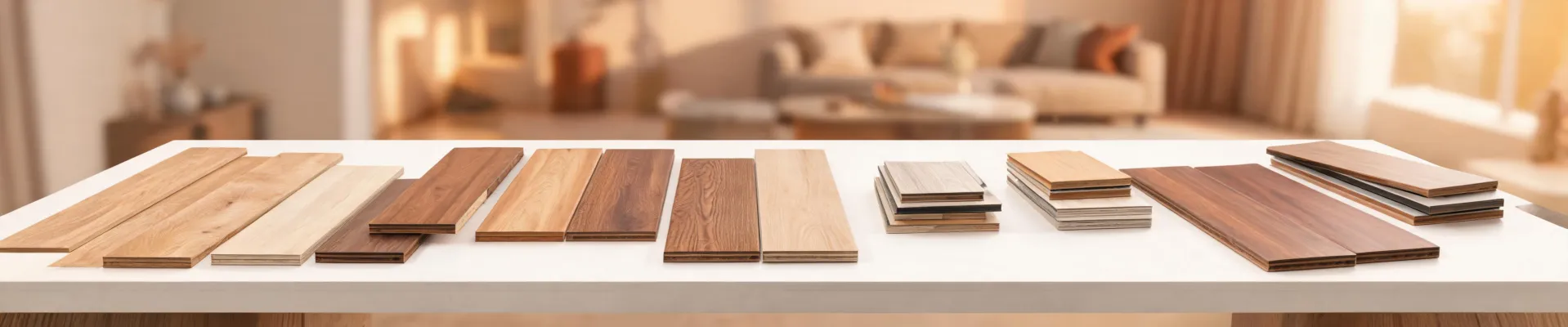
A quick note before we start: if you landed here searching for a Robert Shaw gas valve, this isn't that. Different Shaw, different supply chain. This is about Shaw flooring, tile, and the messy business of buying bulk tile adhesive for wholesale projects. I've been handling wholesale tile adhesive and installation sundries orders for 9 years. I've personally made and documented 11 significant purchasing mistakes, totaling roughly $18,400 in wasted budget. Now I keep our team's pre-order checklist taped inside the purchasing binder.
If you're trying to figure out how to choose tile adhesive for wholesale, you probably already have a spreadsheet open. You've got quotes from three suppliers. You're comparing price per 50-lb bag or per 3.5-gallon pail. And you're wondering why the numbers are all over the place.
That's the surface problem. It's also where I lost most of that $18,400.
The Surface Problem: You're Comparing Price, Not Specifications
In my first year (2017), I ordered 40 pails of unmodified thinset for a large-format porcelain tile job. It was the lowest number on the quote sheet. I checked the coverage math, approved the PO, and moved on. Three weeks after install, tiles started popping. Not all of them—maybe 8% of the field. But enough that the general contractor called me at 6:45 a.m. on a Monday.
That error cost $2,800 in redo plus a one-week delay. The adhesive wasn't 'bad.' It was wrong for the tile. Large-format porcelain has different absorption and weight characteristics than a basic ceramic wall tile. I didn't ask for the ceramic tile specifications before I bought the adhesive. I just assumed 'thinset is thinset.'
If you're buying in bulk, that assumption gets expensive fast. A single wrong pallet doesn't just affect one bathroom. It affects every unit on the schedule.
The Deeper Problem: Adhesive Is Part of a System, Not a Commodity
Here's what I wish I'd understood earlier: tile adhesive isn't a standalone product. It's one component in a system that includes the tile, the substrate, the environment, the installation method, and the person holding the trowel. When you buy bulk tile adhesive, you're locking in that system for hundreds or thousands of square feet.
So when a supplier sends a quote with a rock-bottom price per pound, the right question isn't 'How much cheaper is this?' It's 'What did they remove to get there?' Sometimes it's polymer content. Sometimes it's open time. Sometimes it's batch consistency. Sometimes it's just a different standard.
Ceramic Tile Specifications Tell You What Adhesive You Need
Before I even request adhesive quotes, I now ask for these tile specs in writing:
- Water absorption rate (porcelain vs. ceramic vs. vitreous)
- Tile size, thickness, and weight per square foot
- Backing type—especially for large-format or mesh-backed tiles
- Recommended adhesive class from the tile manufacturer
- Whether the installation is interior, exterior, wet area, or freeze-thaw
That last one matters more than most people think. A standard modified thinset might be fine for a dry interior floor. It might not be fine for a commercial kitchen or an exterior balcony. I'm not an engineer, and I don't play one on job sites. But I can read a technical data sheet and match it to the project requirements.
In North America, you'll see references to ANSI A118.4 for modified dry-set cement mortar and ANSI A118.11 for exterior glue plywood. ISO 13007 uses C1/C2 classifications for cementitious adhesives. Those letters and numbers aren't marketing. They're a common language. If a supplier can't tell you which standard their product meets, that's a data gap you should treat as a warning sign.
Substrate and Environment Change Everything
I once approved a 'rapid-set' adhesive for a 6,000-square-foot commercial job in September 2022. The price was decent. The rep promised same-day return to service. What I didn't check was open time and pot life. The crew couldn't mix and place fast enough. By noon, we were scraping 1,200 square feet of partially set adhesive off the slab. That mistake cost $3,200 and put the schedule behind by four days.
Time pressure made it worse. I had two hours to approve the rush order before the supplier's truck left. Normally I'd request a sample and run a mock-up. There was no time. I went with the limited criteria I had: price and availability. In hindsight, I should have delayed the order and paid for a second truck. The $3,200 redo would have covered a lot of freight.
Wholesale Multiplies the Risk
Retail buyers can return three unused bags. Wholesale buyers usually can't return opened pallets. If you're private-labeling or OEM-ing adhesive, you own the specification. That means you also own the failure if the product doesn't match the job.
Bulk orders also hide batch inconsistency. The first pallet performs great. The third pallet from a different lot has a shorter open time or different color. On a multi-building project, that inconsistency shows up as callbacks. We've caught 47 potential spec mismatches using our pre-order checklist in the past 18 months. Not all of them would have failed. But even a 10% failure rate on a bulk order can wipe out the savings from a cheaper adhesive.
The Cost You Don't See on the Quote
When I add up my mistakes, the visible costs are easy: $2,800 here, $3,200 there. The hidden costs are worse.
- Schedule delay: One wrong adhesive can push tile install back, which pushes countertops, fixtures, and final inspection.
- Credibility: After the third rejection in Q1 2024, our team created a pre-check list. Before that, I was the guy who approved the wrong pail. That reputation follows you.
- Warranty exposure: If the adhesive doesn't match the system, the manufacturer may deny a claim. Then the argument moves to who pays for the redo.
- Wasted labor: Adhesive is cheap compared to labor. Saving $400 on adhesive and spending $4,000 on extra labor is a terrible trade.
I don't have hard data on industry-wide failure rates, but based on our 300+ wholesale orders, my sense is that spec mismatches affect about 8–12% of first deliveries. That number isn't scientific. It's just what I've seen in our own paperwork, callbacks, and credit memos.
What I Do Now: A Short Pre-Check for Bulk Tile Adhesive
I'm not going to pretend this list solves every project. It doesn't. My experience is based on about 220 mid-range commercial and residential orders in North America. If you're sourcing in the EU, Asia, or for heavy industrial applications, your standards and supply chain may be different. If you're working with a $500,000 exterior freeze-thaw job, get an engineer involved. This list is for the 80% of routine wholesale orders that still go wrong because nobody checked the basics.
- Get ceramic tile specifications in writing. Absorption, size, weight, backing, and manufacturer recommendation. No spec sheet, no PO.
- Match adhesive to substrate and environment. Concrete, plywood, backer board, existing tile, wet areas, exterior. Confirm ANSI/ISO class or equivalent.
- Ask for current technical data sheets and batch test reports. FTC guidelines on advertising require claims to be truthful and substantiated. If a supplier says 'commercial-grade,' ask what that means in writing.
- Request a sample and do a mock-up. Especially for large-format tile, fast-set adhesives, or any product you haven't used before.
- Check open time, pot life, and adjustment time against your crew's pace. The best adhesive in the world fails if the installers can't place tile fast enough.
- Confirm lot numbers and batch consistency before the full pallet ships. One good sample doesn't guarantee 20 pallets.
- Coordinate with Shaw flooring transitions. If a project includes Shaw flooring and tile, don't treat them as separate purchases. Transitions, underlayment, and adhesive compatibility still need to be reviewed together.
- Run the total cost math. Adhesive price + freight + labor + potential redo. A 12% lower adhesive price isn't a win if it raises callback risk by 3%.
If you're in the other 20%—exterior, freeze-thaw, industrial, or a project with unusual substrates—stop and get a specification review. Honest limitation: this checklist is designed to prevent routine purchasing errors, not to replace project-specific engineering.
That's the lesson I keep learning. The cheap pail isn't the expensive part. The wrong system is.