I'm a procurement manager at a 45-person commercial interiors company. I've managed our materials budget ($1.6M annually) for seven years, negotiated with more than 50 vendors, and documented every order in a cost tracking system I built from scratch. The system isn't pretty, but it catches things the pretty quotes don't show.
That 'unit price bias' cost me early in my career. I spent my first two years choosing the lowest bid and the next five paying for it. The real cost of a material isn't what the invoice says. It's what happens after the invoice.
Here's what you need to know: the problem is rarely the product. It's the specification.
Three Quotes, One Down Payment
In late 2024, we bid a 4,300 sq ft office renovation. Three vendors quoted the same-looking package of Shaw flooring and ceramic tile. One said $52,000. One said $47,300. The third said $41,800, and it came with a discount if we ordered before the end of the quarter. Seriously, that phone call should have been a red flag.
The low bid avoided three things: naming the tile setting material, requiring subfloor moisture tests, and budgeting for the elastomeric coating review on the exterior walls. That's not a discount. That's a scope gap.
We didn't take the low bid. But plenty of people would have. And the scary part is, they wouldn't find out why it was low until the floor failed. If you've ever watched a tile installer stop mid-floor because the substrate wasn't flat enough, you know that feeling. Trust me on this one: the cheapest quote is a down payment, not a final price.
The Surface Problem Is Your Budget. The Real Problem Is the Spec.
After tracking dozens of orders over seven years, I found that most overruns don't come from material prices. They come from specification gaps. A specification gap is any required activity or document that isn't listed in the scope. It can be as simple as a missing primer or as complex as a compliance review. When the gap is found, it always costs more after the bid than it would have before.
The low quote isn't a discount. It's a bet that no one will check the specification.
Engineered hardwood is a system, not a plank
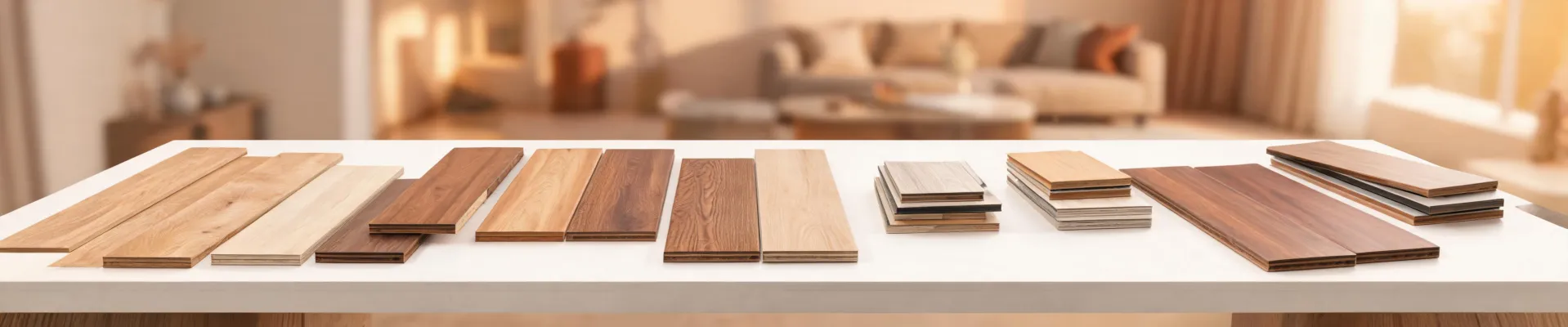
When I wrote Shaw engineered hardwood flooring into the spec, I assumed that ended the conversation. It didn't. The product data sheet required subfloor moisture testing, acclimation on site, and a flatness tolerance our concrete slab didn't meet. If we skipped those steps, the warranty discussion was over before it started. Per current NWFA installation guidelines, that's normal. In 2024, when I compared our two hardwood projects side by side—same product, different moisture preparation—I finally understood why the details matter so much.
I had a quote that was $6,000 lower on a 2,000 sq ft job. The upside was $6,000. The risk was installing Shaw engineered hardwood over a slab that hadn't been moisture-tested. I kept asking myself: is $6,000 worth replacing the whole floor in 18 months? No.
The moisture tests themselves weren't expensive—roughly $600 for a calcium chloride kit and an in-situ RH probe reading. The redo would have been a lot more. Now I put those tests in the budget before anyone talks about material cost.
Ceramic tile doesn't fail quietly
Don't choose a ceramic tile manufacturer based on a sample glued to a board. Ask for water absorption data (ASTM C373) and DCOF data (ANSI A326.3) for the exact tile and lot. In the current TCNA Handbook, large-format tile (meaning 12x24 or larger) installations require a flatness measurement and a project-specific layout. There is no one-size-fits-all answer. A good ceramic tile manufacturer will send those documents without making you feel like a nuisance. Now I keep a separate column in the tracker for spec compliance documents. (Note to self: never assume the sales rep knows what ANSI A326.3 is.)
Even the best ceramic tile manufacturer can't save you if the commercial tile distributor doesn't flag lot changes. In 2023, we ordered two batches of the same tile for a 3,000 sq ft floor. The shade difference was obvious. The distributor hadn't disclosed that the lots were different, so we had to order a third batch and redo a transition zone. That one minor mismatch cost $2,400.
We had 48 hours to pick a replacement tile for a lobby before a client visit. Normally I'd want three submittals and a TCNA spec review, but there was no time. I went with a commercial tile distributor we'd used for years. In hindsight, I should have pushed back on the timeline. The relationship is the only reason it worked.
The ceramic tile manufacturer's job is to make a consistent, testable product. The commercial tile distributor's job is to connect that product to your site. Both have to be accountable. If either one treats your order as too small, you'll hear about it later—usually after the tile is cut.
Elastomeric coating compliance is a separate project
And then there's the part nobody puts in the flooring budget: elastomeric coating compliance requirements. They don't show up on the quote until they show up in an inspection.
On a 2023 project, the exterior coating specified for the parapet and stairwell looked like a simple waterproofing layer. It wasn't. The national VOC rule for architectural coatings (40 CFR Part 59, Subpart D) sets limits, and state rules like South Coast AQMD Rule 1113 are stricter in many categories. The manufacturer's submittal had to include VOC data, dry film thickness, and application conditions. If the coating was part of a rated assembly, we also needed flame spread and smoke developed values per ASTM E84. The coating itself was $900. The compliance review, primer, and schedule impact added almost $4,000. Compliance rules change, so verify the current version with the agency before you spec.
Why does this matter to a flooring buyer? Because on a mixed-use job, the same GC is coordinating tile, hardwood, and exterior coating. If the coating submittal gets rejected, the schedule shifts. And schedule shifts are where flooring budgets die.
The Real Price of a Bad Specification
In 2023, we approved a low bid for a 2,200 sq ft tile installation. The tile was fine. The substrate wasn't flat enough for the format, but no one caught it until the installer did a straightedge check. We paid $1,850 to self-level the slab and lost four days. The savings from the low bid? $1,200.
Those are the visible costs. The hidden ones are slower: the schedule delay, the phone calls, the client who starts watching every decision after the first surprise. Maybe that's why the difference between a good spec and a bad spec is way more than the difference in material price.
When I audited our 2024 spending, I found the projects with complete submittals were the projects with fewer change orders. That sounds obvious, but it's amazing how often we used to approve a PO without the paperwork. Small contractors and small orders feel this sharpest. I know because I started as one. When I was ordering $200 of tile for a single bathroom, the vendors who treated that order seriously are the ones I still use for $20,000 orders. Small doesn't mean unimportant—it means potential.
What Actually Works
After seven years, I've stopped looking for the lowest bid. I look for the total cost of ownership (i.e., the material, the spec compliance, and the schedule risk) rather than the unit price. And I look for the vendor who treats the specification like part of the product.
- Ask for the full installation manual before you issue the PO.
- Ask the ceramic tile manufacturer for test data on the exact lot, not a generic binder.
- Ask the commercial tile distributor what they'll do if a small order arrives with a shade variance.
- Put elastomeric coating compliance requirements on the submittal schedule, not just the paint schedule.
That's it. No magic formula. No 'we'll make it right' promises. Just suppliers who take the spec as seriously as they take the order. Our procurement policy now requires a full submittal list before we approve a PO. That's not red tape. It's how we stopped paying twice.
When I was starting out, the vendors who treated my $200 orders seriously are the ones I still use for $20,000 orders. Small doesn't mean unimportant—it means potential.