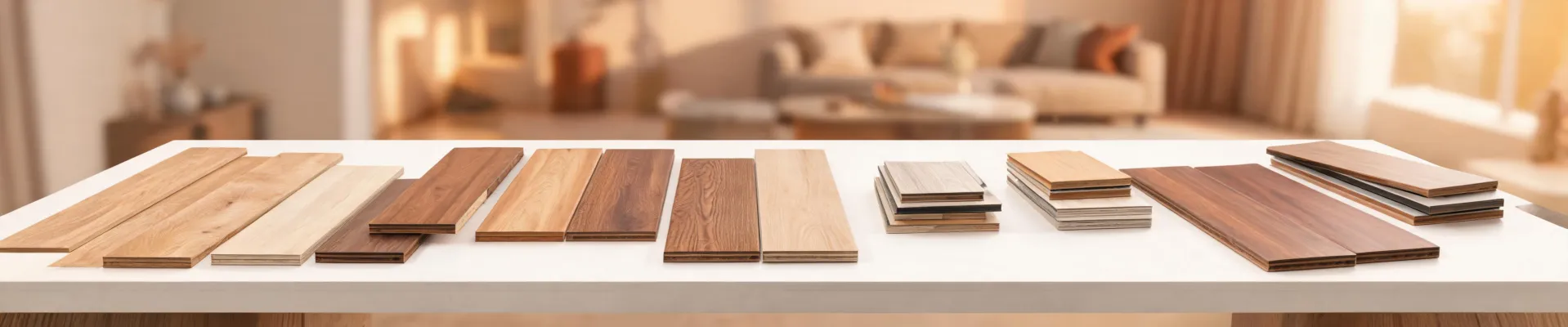
After managing flooring procurement for six years and a bit over $180,000 in orders, here's the short version: the product brand matters less than the specification—and the supplier's honesty matters most. We buy Shaw flooring and Shaw contract carpet for a lot of our work, but the real cost savings came from tightening specs on bulk porcelain tile and deciding whether we needed OEM or private-label underlayment. If you're comparing vendors, start with your performance spec, not the brand list. That's basically the whole argument.
Why Trust a Brand at All? A Cost Perspective
I'm not loyal to any brand. I'm loyal to predictable costs. I'm a procurement manager at a 50-person commercial interiors company. For the past six years, I've managed our flooring budget, negotiated with 30-plus vendors, and tracked every order in a cost system that's honestly just a very detailed spreadsheet. Our 2024 materials spend was about $62,000. Not massive. But enough that a 10% mistake hurts.
Shaw flooring earns a spot on our projects because their published specs are consistent. For Shaw contract carpet specifically, that means face weight, backing system, yarn system, and stain treatment are all documented before I sign a purchase order. When you buy contract carpet, you're not buying a roll of soft material—you're buying a performance claim. The less guessing required, the lower your overall cost.
One subtle cost thing: we've seen cheaper carpet from other mills over the years. But installation and callback costs eat up the difference. In 2024, we bid a 12,000 square foot office project. The cheaper carpet would have saved us $3,100 in material. Our installer then quoted an extra $0.18 per square foot because the backing was less forgiving. That wiped out a third of the savings. So we stayed with Shaw.
To be fair, Shaw isn't the only good carpet brand. But a spec that matches the product on delivery is worth a real number.
Bulk Porcelain Tile: The Quote Is Not the Price
Bulk porcelain tile is where I've seen the most inflated savings. We once compared two suppliers for a 20,000 square foot project. Supplier A quoted $2.15 per square foot. Supplier B quoted $1.87 per square foot. I almost went with B. Then I calculated the total landed cost: B charged $850 for delivery, added $0.12 per square foot in pallet handling, and included a 3% breakage allowance. At the end, B was about $0.04 per square foot cheaper—not the $0.28 the quote suggested.
But the bigger problem was the tile itself. I assumed 'same porcelain tile' meant the same thickness. It didn't. B was 8mm, our spec required 9mm. The per-square-foot price looked great, but the material was wrong for our grout and substrate conditions. We caught it before ordering, but only because I had finally learned not to trust the phrase 'it's equivalent.'
Everyone told me to check spec sheets before approving substitutions. I only believed it after ignoring that advice once and getting invoiced for a pallet of tile we couldn't use. That was a $1,200 mistake. Now every quote goes through the same verification: dimensions, thickness, water absorption, breaking strength, packaging, and pallet count.
Floor Underlayment: Private Label vs OEM Is a Real Decision
This is the part that trips up our own team. The term 'floor underlayment private label' gets thrown around as if it's the same as a custom product. It's not. Private label means the manufacturer makes their existing product, then puts your brand on it. OEM means you specify the actual formulation, density, thickness, and packaging—and the manufacturer makes that for you.
For a distributor, private label can be a smart move. It gives you a branded product without paying for custom development. Lead times are faster, minimum order quantities are lower, and the price is usually pretty attractive. But you don't own the spec. If the manufacturer changes the formulation, you might not even know.
The floor underlayment OEM vs private label decision comes down to who owns the risk. If you buy private label and your brand goes on the roll, your customer doesn't call the factory when something fails—they call you. OEM lets you lock down the exact performance data and the exact formula. That's why we chose OEM for a hotel renovation in 2024. Private label was 30% cheaper and available in two weeks. OEM was six weeks and cost more. The project had a strict acoustic requirement, and the private-label product didn't have test data for that assembly. The extra cost was insurance.
My process mistake before that decision? We didn't have a formal approval chain for underlayment substitutions. The third time a 'same spec' underlayment showed up with a different density, I finally built a substitution checklist. Every product gets compared on four things: density, thickness, compression recovery, and acoustic performance. If it doesn't match, it doesn't get approved.
What I Actually Do When Buying Flooring
If you're wondering what this means for your next purchase, here's my process:
- Write the spec first. Carpet face weight and backing, tile thickness and water absorption, underlayment density and acoustic rating. The brand comes later.
- Compare total landed cost, not quoted price. Delivery, pallet fees, breakage allowance, custom inspections, and the cost of the wrong product landing on site.
- Decide private label vs OEM before you ask for quotes. If you don't need a proprietary spec, private label is usually the better financial call. If you need performance data or a competitive edge, OEM is the honest answer.
- Ask the supplier what they're not good at.
The vendor who said 'This isn't our strength—here's who does it better' earned my trust for everything else.
The Boundary: When This Approach Doesn't Apply
I don't want to make this sound more complicated than it is. For a small project—say under 1,000 square feet—a local distributor will probably beat a direct order. Freight alone makes bulk specifications pointless. If your team already knows a product works, and you have years of experience with it, you don't need my spec checklist. You need a price.
Also, Shaw flooring isn't the right answer for every project. No brand is. There are good laminate and vinyl options across the market, and if the project is a rental flip or a temporary space, buy the cheaper product and move on. I get why people do that—budgets are real.
Granted, this approach takes more upfront work. Writing a tight spec, checking certifications, and tracking substitutions is not exciting. But it's the reason we don't have rework costs anymore. And for me, that's the real metric.