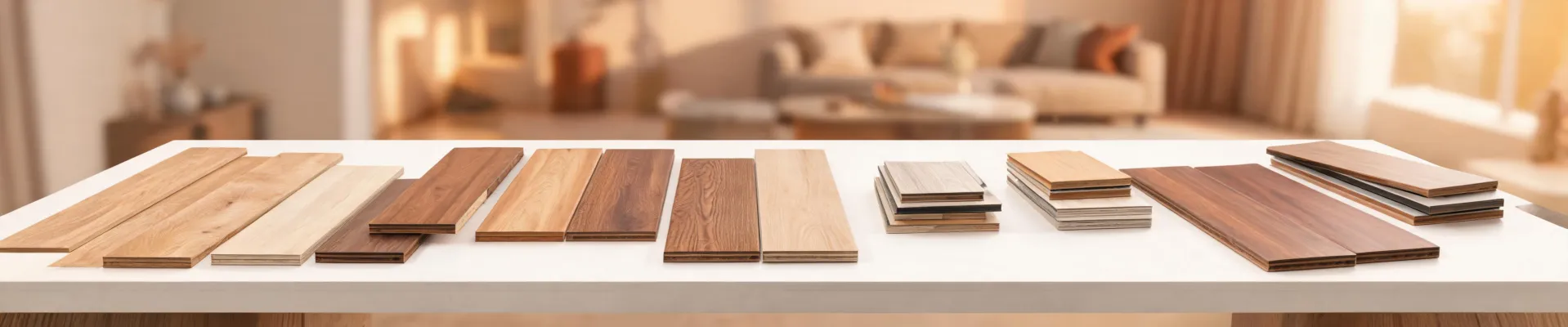
I'm a procurement manager at a 40-person commercial flooring company. I've managed our materials budget—about $180,000 per year—for the last six years, and I've negotiated with more flooring and tile vendors than I can count. So if you're trying to choose between buying Shaw flooring direct or sourcing through a distributor, I'm exactly the kind of person who will annoy you with a spreadsheet.
Here's the thing: this isn't really a 'Shaw vs. competitor' comparison. Shaw is a serious player in carpet, luxury vinyl plank (LVP), hardwood, laminate, and tile. The actual choice is sourcing route. Should you buy factory-direct? Or use a local distributor for the same products? And where does mosaic tile wholesale fit into the equation?
I'll compare both routes across four dimensions: true cost, minimums and lead times, catalog scope, and what happens when something goes wrong. Then I'll give you the scenario-based answer I wish someone gave me.
Pricing in this article is based on quotes I pulled between October 2025 and January 2026. Verify current pricing before you budget.
The comparison framework
First, let's set the baseline. I'm comparing two routes for the same brand and similar tile categories:
- Route A: Direct from Shaw — large-volume orders, full cartons, potentially lower per-unit price.
- Route B: Regional distributor — smaller quantities, mixed brands, faster lead times, more hand-holding.
Why these two? Because a buyer like me rarely needs either all-or-nothing. The decision is about which side gives you the best total cost for a specific project.
What I mean is that the 'cheapest' option isn't just about the sticker price—it's about the total cost including your time spent managing issues, the risk of delays, and the potential need for redos. I built a TCO spreadsheet after getting burned on hidden fees twice. It's not fancy, but it's saved me a lot.
Dimension 1: Unit price vs. all-in cost
On paper, direct wins. In 2025, I quoted a 10,000-square-foot commercial LVP project. Shaw direct came in at $2.78/sq ft. The distributor quoted $2.95/sq ft. That's a $1,700 difference before shipping.
But then the real numbers arrived. Direct freight from the factory: $980. Staging and break-bulk at my warehouse: $420. A rented pallet jack because our material handler was down: $85. The quote didn't include any of that. Total hidden cost: $1,485. Direct still ended up cheaper, but by $215, not $1,700. And that was on a straightforward delivery with no storage issues.
The same logic applies to mosaic tile wholesale. A per-sheet price might look great until you discover the seller's minimum is 50 sheets. If you only need 90 square feet for a feature wall, you're paying for material that will sit in your inventory for two years. At least, that's been my experience with tile jobs under 200 square feet.
I should add that the distributor quote included a drop trailer and a claims person who answers the phone. Those things matter when the driver shows up late and the site superintendent is staring at you.
If you're looking for a ceramic tile wholesale cost guide, this is the short version: the first number on the quote is the least reliable number. Look for carton minimums, restocking fees, breakage allowance, and delivery window. In other words, read the fine print before you compare.
Dimension 2: Minimums, lead times, and the LVP catalog trap
Direct manufacturers love consistency. That means minimums. On one repair job in Q2 2025, I needed 400 square feet of commercial LVP. The direct minimum was 1,000 square feet. The distributor charged $0.35 more per square foot but let me buy exactly what I needed. Final cost: $140 more on material, but I avoided $1,000+ of leftover material that would have been written off anyway. Plus, we got it in three days instead of two weeks.
That's why when someone asks for an LVP flooring catalog, I tell them to look past the pretty pictures. Ask which products are stocked in a local warehouse and which are made-to-order. A catalog is a menu, not a promise. (Should mention: we had a 3-day buffer on that repair, so the speed wasn't critical. But it still made the decision easier.)
For mosaic tile wholesale, lead times can vary by material. Glass mosaics often come from overseas and need longer. Porcelain mosaics may be stock. Direct from a mill is not always the answer. The right answer is: check the actual lead time for your specific product before you pick a route.
Dimension 3: Catalog scope and the 'Shaw sink' confusion
Here's something that surprised me. In 2024 and 2025, I had two separate GCs ask about ordering a 'Shaw sink' alongside their tile. I get it—if you see Shaw flooring and Shaw tile, maybe you assume the brand makes plumbing fixtures too. As of April 2026, Shaw's own product categories are still flooring-focused: carpet, area rugs, resilient, hardwood, laminate, tile, plus underlayment and adhesives. According to Shaw's corporate site (shawfloors.com, accessed April 2026), I didn't see plumbing fixtures in the lineup. If you're searching for a Shaw sink, double-check the brand spelling and product line before you spec it. Assuming a product exists is how you end up with a change order.
This matters for the direct-vs-distributor comparison because your source route affects product scope. Direct from Shaw gives you deep access to Shaw product lines. A distributor can usually mix Shaw flooring with a different tile brand, trim, or installation accessory. One-stop shopping has real value when you need coordination. If your project needs spec and compliance letters, direct can get you faster access to the manufacturer's technical team. But for product mixing, the distributor wins.
For mosaic tile wholesale specifically, you will almost certainly need more than one brand. Mosaic isn't a single material—it's ceramic, porcelain, glass, stone, or metal. No single manufacturer carries every face. A distributor who handles multiple lines is often the better partner for this category. Between you and me, the only person who should buy direct for a mosaic-only project is someone with a huge spec and a very clear material list.
Dimension 4: Risk, claims, and prevention over cure
I have mixed feelings about direct-from-manufacturer warranties. On one hand, direct communication with the brand is nice. On the other, a manufacturer is not your local advocate. If a pallet arrives damaged, you're the one filing claims. A distributor with a local counter can help you inspect, photograph, and coordinate returns.
We switched to a distributor for tile claims after a bad experience: the 'cheap' direct option resulted in a $1,200 redo when dye-lot variations didn't match. That redo was my fault for trusting the quote without physical samples. Prevention is cheaper than curing.
Now I run a checklist before any large order. It sounds basic, but it works:
- Lot numbers match across cartons and across flooring and tile production runs.
- Pallet photos taken before the driver leaves the dock.
- Samples compared to the actual field order under job-site lighting.
- Lead time confirmed in writing, not just a verbal 'should be okay.'
That checklist took me about 20 minutes to create after my third mistake. It has saved us an estimated $8,000 in potential rework. 5 minutes of verification beats 5 days of correction.
Scenario recommendations
So which route should you use? It depends. And no, that's not a cop-out.
Buy direct from Shaw when:
- Your order clears the manufacturer's minimum comfortably.
- You have warehouse space and can manage the freight.
- The spec is final—no changes after order.
- You're buying LVP flooring catalog products in project quantities, not repair quantities.
- You're building a private label or OEM program and the order is part of a larger brand partnership.
Use a distributor when:
- The order is under 1,000 square feet or needs to arrive fast.
- You need multiple brands, including mosaic tile wholesale from different lines.
- You want local support for claims and returns.
- You're still deciding between LVP and tile and need someone to ask questions.
For ceramic tile wholesale cost decisions, the answer is always the same: compare TCO, not per-square-foot price. The manufacturer's direct price can win on large, stable orders. A distributor can win on flexibility and risk reduction. There is no universal winner.
Bottom line: I've bought from both routes. I'll keep using both. The next time someone tells you 'direct from the factory is always cheaper,' ask them where the pallet gets staged. If they don't know, send them my way. Trust me, I have a spreadsheet for that.