-
Why I get paid to be suspicious
-
What I check before approving Shaw vinyl plank flooring
-
Commercial tile: the spec sheet is the product
-
Working with a laminate flooring distributor: what actually matters
-
Mosaic tile wholesale cost guide: the part buyers skip
-
Environmental claims: verify before you repeat them
-
Where I draw the line
-
Bottom line
I've reviewed more than 200 flooring product lines over the last four years, and about 12% of first-round samples get rejected for spec drift. If you're a B2B buyer about to commit to Shaw flooring, commercial tile, laminate, or a mosaic tile wholesale order, start with the spec sheet—not the sample board. That's not motivational talk. I do not mean a sample is useless—it's just not proof. It's the difference between a floor that performs and a callback that eats your margin.
Why I get paid to be suspicious
I'm a quality/compliance manager for a flooring supplier. I review every product before it reaches customers—roughly 200 unique items per year. I've rejected a lot of first deliveries in 2025 for things that don't show up in a glossy brochure: mismatched dye lots, wear layers that were thinner than the spec, damaged packaging, and environmental claims that weren't backed up.
It took me about four years and one very expensive batch failure to understand that the sample board is the least reliable part of the buying process. That failure happened in March 2023. We received 8,000 square feet of commercial tile where the dye lot varied across boxes. In the showroom, the samples looked fine. In a continuous corridor, the color shifted every few feet. That problem cost us a $22,000 redo and delayed the project by two weeks. I didn't fully understand the value of lot number tracking until that order.
When I implemented our verification protocol in 2022, product-related returns dropped by 34%. That wasn't because we picked better samples. It was because we started checking spec sheets against actual deliveries. I tell every new buyer the same thing:
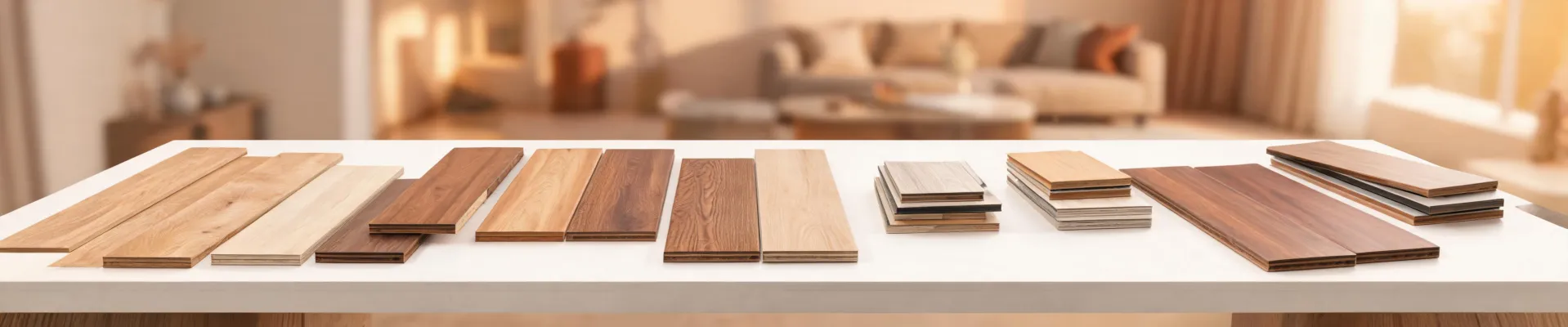
The sample is a photograph of the product on its best day. The spec sheet is the contract.
What I check before approving Shaw vinyl plank flooring
Shaw vinyl plank flooring is a proven category, but “proven” isn't universal. I check the product data sheet, not the display. The three numbers I care about most: wear layer thickness (usually measured in mils), overall plank thickness, and warranty coverage. Not every line is built for a grocery store, and not every line is overkill for a home office. If the supplier can't tell me the wear layer in writing, that's a red flag.
I also check whether the word “waterproof” on the data sheet means waterproof in the real world. Some Shaw vinyl plank flooring product data sheets say “waterproof”; others say “water-resistant.” They are not the same thing. Honest confusion is forgivable. Marketing copy that blurs the line is not.
Commercial tile: the spec sheet is the product
Commercial tile has an advantage over carpet and vinyl: it doesn't hide much. But that also means manufacturing consistency is what separates a good install from a nightmare.
When I review commercial tile, I look for PEI rating, water absorption, static coefficient of friction, and lot numbers. Dye lot issues are the most common reason I reject tile. A variation that's invisible on a single 12x12 sample becomes obvious over 5,000 square feet. I use a color tolerance framework based on the same Delta E logic used in Pantone brand-critical color matching: Delta E under 2 is the target for brand-critical matches, and anything above 4 is visible to most people. That's not my opinion—it's a color matching standard that applies across production runs. If a tile supplier can't provide lot numbers for every box, don't assume the order will match the sample.
Working with a laminate flooring distributor: what actually matters
When I evaluate a laminate flooring distributor, I'm not only evaluating the floor. I'm evaluating their storage, their handling, their claim process, and whether their current stock matches what they sample. I won't name the distributor, but I've received an AC4-rated laminate sample and then watched the actual shipment carry AC3 packaging from an older stock. Same product code, different performance class. They didn't know they were doing it. That's the point: a good distributor verifies what comes off the truck, not what's on the website.
I'll be honest: I once approved a laminate order without a final review because we'd used that line for years. That's the same week the manufacturer quietly changed the wear layer specification. The floor didn't fail immediately, but it taught me to put a re-verification clause in every contract.
Laminate is a strong product in dry residential spaces. For commercial wet areas, I'd point you toward vinyl or tile. That's not because laminate is bad; it's because recommending a product for an application it wasn't built for is how good working relationships fall apart.
Mosaic tile wholesale cost guide: the part buyers skip
I'm not going to give you a universal price per square foot for mosaic tile, because that number moves with raw materials and freight. But I can give you a cost framework that's more useful. In a Q1 2024 audit, we priced the same mosaic pattern from two factories. The cost difference was more than 40% per square foot. The expensive one used tighter mesh backing, consistent tile thickness, and uniform color lots. The cheap one looked fine as a 6-inch sample and came apart in the box during shipping.
When you compare mosaic tile wholesale costs, line up these variables:
- Tile material: ceramic, porcelain, glass, or natural stone
- Tile thickness and sheet size
- Mesh backing material and adhesive quality
- Color lot consistency across production runs
- Packaging and palletization
The lowest quote is only cheap if every one of those variables matches. I've also learned never to assume “same pattern” means the same backing quality across suppliers.
Environmental claims: verify before you repeat them
I've started checking environmental claims more carefully, too. Per FTC Green Guides (ftc.gov), a claim like “recyclable” needs to be truthful and substantiated, and if recyclability depends on local access, the claim has to say that. I apply the same standard to “low VOC” and “eco-friendly” declarations on flooring. If you repeat a claim without evidence, you inherit the risk.
Where I draw the line
I have mixed feelings about “one-stop shop” suppliers. On one hand, simplifying procurement is valuable. On the other hand, “we can supply everything” often means “we're not deeply experienced in any of it.” The vendor who says, “this isn't our strength—here's who does it better,” earns my trust for everything else. I'd rather work with a specialist who knows their limits than a generalist who overpromises.
That applies to me too. I'm comfortable reviewing Shaw flooring, commercial tile, laminate, and mosaic tile. But if a project needs fully waterproof wood-look flooring in a shower, I'm not going to spec laminate or even every vinyl plank line. I'll send you to tile. That's not a limitation; it's the job.
Bottom line
Honestly, the difference between a good flooring buy and a bad one comes down to verification. The sample is a starting point, not a promise. The spec sheet, lot numbers, wear layer, backing, packaging, and honest answers about application are what make a product trustworthy.
So before you sign that purchase order for Shaw flooring, commercial tile, laminate, or your next mosaic tile wholesale volume, ask for the data. If the supplier can't provide it, that's the answer you already needed.