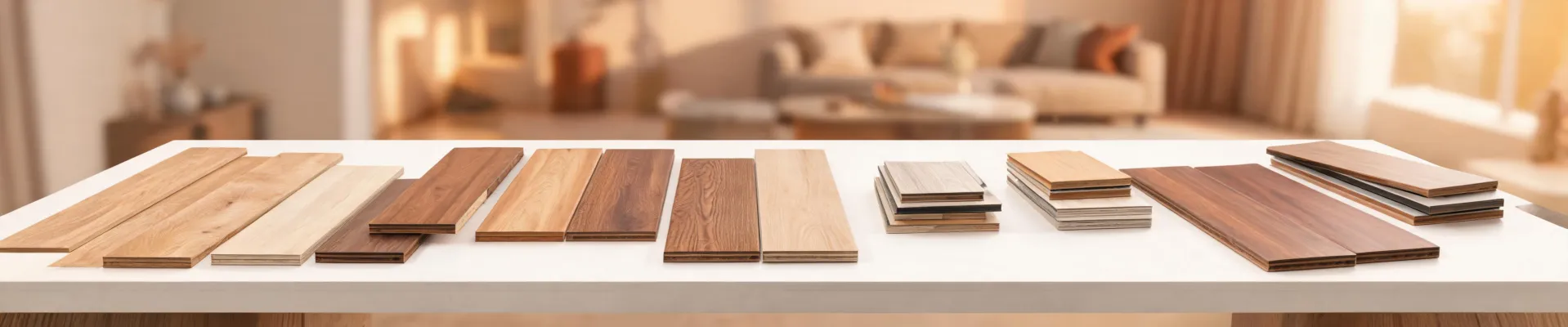
The bid came in $18,000 under the next-lowest offer. The buyer who showed it to me thought he'd won. Same product, he said. Same color, same thickness, same visual.
Six months later, the laminate surface was wearing through in the hallway. The supplier's rep pointed to the fine print: "AC2, residential use only." Nobody had asked for the laminate flooring specifications at the start.
I'm a quality and compliance manager at Shaw, a flooring and building materials company. You've probably walked on a Shaw flooring product at some point — carpet, LVP, hardwood, or laminate. I review product submittals and test reports before orders ship: roughly 700 items a year, give or take. Most of the problems I catch aren't defective products. They're missing or mismatched specs.
The Buyer's Problem Isn't "Bad Suppliers." It's An Empty Spec
I've sat across from distributors and contractors who thought their problem was finding an affordable vendor. They'd collected three bids, picked the low one, and then called me because the floor didn't perform. That's not really a vendor problem. That's a specification problem.
To be fair, most buyers don't do this every day. A contractor might buy flooring six times a year, and tile maybe twice. That's exactly why the same mistakes keep happening — the process feels familiar, but the details are easy to skip.
The price gap between bids usually isn't a mystery. It's the grade of the product under the surface. Two pieces of laminate can look identical and be rated very differently for abrasion, moisture, and impact. Two tiles can have the same pattern and different PEI and slip ratings. The cheapest bid was probably cheap because the spec on that product was lower — not because one vendor is more generous.
The question everyone asks is "what's your best price?" The question they should ask is "what's the spec behind that price?"
Why Under-Specification Is So Common
In my experience, buyers focus on what they can see: color, texture, thickness, the look of the sample. The performance specs — wear rating, slip coefficient, water absorption, coating adhesion — are numbers on a sheet that most people don't compare.
Put another way: if nobody writes down the requirements, the bidder who quotes the lowest class of product wins. That product will meet the written spec, because there wasn't one. It just won't meet the actual job conditions.
I used to think specs were mostly paperwork for the architect's file. I only stopped thinking that after I had to eat an $800 mistake early in my career. I'd skipped a spec check because I was sure the product was identical to the sample. It wasn't. The damage wasn't huge, but the lesson stuck:
The spec is the product. If the spec is wrong, the product is wrong, no matter how convincing the sample looks.
Three Product Types Where the Spec Gap Shows Up
Laminate Flooring: Wear Rating Before Looks
Laminate flooring specifications have a clear hierarchy: AC3 for light residential traffic, AC4 and AC5 for commercial conditions. The North American Laminate Flooring Association (NALFA) based the ratings on tests that include abrasion, impact, and moisture resistance.
A laminate floor rarely fails because of its decors. It fails because it was rated for a bedroom and installed in a break room. In 2025, I still see AC2 and AC3 laminate specified for offices and retail. That's a mismatch no warranty will cover once the client asks to see the application conditions.
Ask any supplier: what's the AC rating, and does the test report match the product that will actually ship? Also check the HDF density and the water expansion data. Two boards can feel similar to a sample. The numbers will tell you which one survives.
Commercial Tile: Slip Resistance Is Not Optional
When you're evaluating a commercial tile supplier, the three specs that matter most are the PEI rating, the DCOF (dynamic coefficient of friction), and water absorption. ANSI A137.1 is the baseline standard for tile in North America. It covers dimensional tolerance, breaking strength, and slip resistance.
The failure I see most often isn't cracked tile. It's tile that meets the installation requirement but not the usage requirement. A glossy porcelain looks great in a showroom and is dangerous in an entrance lobby the first time someone walks in with wet shoes. The wet DCOF number matters, not just the polished dry-room gloss.
Have the supplier send the actual test report for the batch — not the generic brochure value. The gap between those two documents is where most problems get planted.
Protective Coatings: The Substrate Changes Everything
How to choose protective coating for wholesale? The answer is usually a question: what substrate, what environment, and what wear level? There's no single "right" coating for every job. The vendor who asks about those conditions before quoting is the one who knows what they're doing.
Under ASTM D4541, we run a pull-off adhesion test on the actual substrate. It costs a day and answers the question that causes the most failures: will this coating stay attached to this surface? That test prevented a two-week delay in 2024. The coating the customer had planned to use was not intended for sealed concrete. A test patch caught it before we applied it to 18,000 square feet.
Also check VOC limits for your region, cure time, UV stability if there's daylight exposure, and the minimum application temperature. Those aren't small details. In a commercial setting, they decide whether the coating is still on the floor in a year.
The Real Cost of Spec Failures
The common thread across all three examples: the problem wasn't noticed until after installation. That's when it becomes expensive.
- Rework and removal costs — generally multiples of the original purchase price.
- Damaged client relationships that you lose on paper but lose for the next bid.
- Liability, especially with slip resistance. A claim can easily exceed a decade of the savings from choosing the low bid.
- Schedule delays. A job that doesn't open on time triggers penalties and reputation damage.
In our Q1 2024 quality audit, we reviewed 1,400+ product submittals across product lines. We found 11% had discrepancies between the test documentation and the marketing spec. That's roughly one in nine submittals. The most common cause wasn't a fraudulent supplier. It was simply that the spec had never been requested, so the supplier quoted the closest product they had.
I'll be honest: I only understood the cost of this after it happened to a client of ours. They chose a coating based on price. The coating lifted from the floor in sheets. The redo cost them $22,000, and the opening was pushed back three weeks. The supplier did supply a coating. It just wasn't rated for that substrate.
What a Spec-Compliant Buyer Does Differently
The fix is not difficult, but it requires acting before the order, not after the failure.
- Write the performance spec first. Include the rating you need — AC class for laminate, PEI and DCOF for tile, adhesion and cure properties for coatings. Then ask for bids against that spec.
- Ask for the test report, not the marketing sheet. Any vendor can summarize a spec. The third-party report is harder to fudge.
- Test protective coatings on the actual substrate. "Good adhesion to concrete" means nothing until the concrete type, curing, and sealers are defined.
- Put the spec in the purchase order. If the wrong product ships, you have a paper trail that says what you ordered.
- Walk away from suppliers who can't provide specs in writing. Not because they're crooked — because you can't enforce what you can't measure.
The Bottom Line: Transparency Is a Risk Tool
The cheapest bid isn't necessarily a trap. The supplier might have quoted a product with a lower performance class. The problem is when nobody can see the difference.
The fix is making specs visible before the purchase. The supplier who can show you the full spec and the test report upfront is giving you a tool to compare fairly. The supplier who says "don't worry, it meets the standards" without naming which ones is leaving the risk on your side.
That's the approach we take at Shaw. Our laminate flooring specifications, tile test data, and coating documentation are published before you ask, because hiding them would make your job harder. It doesn't mean we're the only supplier doing this. It means you can verify what we're proposing without a phone call.
Buy flooring like you're buying an obligation, not a decoration. Because that's what it is: a product that must perform for years, in conditions you defined. The more precisely you define those conditions, the more likely you get a floor that survives.
And next time a bid arrives $18,000 under the others, ask to see the spec sheet before you celebrate.