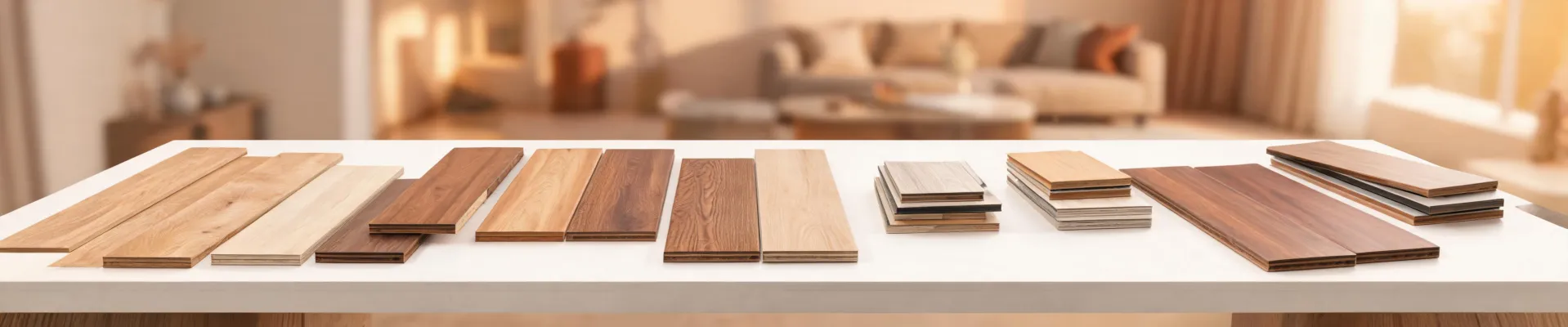
I’m a quality/compliance manager in the building materials space. I approve or reject production lots before they ship to B2B customers—roughly 200 flooring and tile orders each year. Since 2022, my team has rejected about 5% of first-pass deliveries for thickness tolerance issues, broken material, or labels that didn’t match the actual spec.
The question I hear most often from distributors and contractors is a fair one: “Should I specify Shaw flooring, or go with an OEM/private-label program?” If you frame it as brand versus non-brand, you’re asking the wrong question. The quality question is about the system around the product.
The two routes I compare
There are two common ways to buy flooring and tile for a B2B project:
- Route one: a single-source brand system. You choose a known manufacturer like Shaw and buy the flooring, underlayment, and related installation components as part of one product family.
- Route two: an OEM/wholesale stack. You build your own supply chain with a floor underlayment OEM, a commercial tile wholesale account, and a specialized mosaic tile supplier.
Both routes can produce outstanding work. They also fail differently. A brand gives you more published specifications and technical support, but it doesn’t replace your obligation to check what arrives. An OEM route gives you more flexibility, but only if you can enforce a real specification.
Here’s what I check before I approve either one.
What “problems with Shaw vinyl plank flooring” usually mean
Search data says a lot of buyers worry about “problems with Shaw vinyl plank flooring.” I’ve been part of claim reviews where the plank was named as the problem, and the actual cause was something else. The most common patterns I see in vinyl plank callbacks are:
- Slab moisture was never tested before installation.
- The subfloor wasn’t flat enough for click-lock edges.
- The wrong underlayment was used—usually something too thick and soft.
- There was no room for expansion at the perimeter or under fixed cabinets.
Those conditions can damage almost any rigid-core vinyl plank, not just Shaw. That isn’t a way of dismissing real factory defects. Factory defects happen, and that’s why I ask for a sample from the actual production lot before a large order ships. But most of the vinyl plank failures I’ve reviewed were system failures, not material failures.
One phrase I’ll avoid in my own recommendations: “vinyl plank is waterproof.” A quality vinyl floor is water-resistant enough for spills and normal cleaning, but it is not a substitute for a proper moisture barrier. If you’re installing over concrete, read the moisture requirements in the manufacturer’s installation guide.
Buying floor underlayment OEM: don’t make the pad an afterthought
When you start a floor underlayment OEM program, you’re not just buying foam. You’re buying part of the floor system. I learned that after seeing the same plank product perform differently with two underlayments.
If the underlayment is not approved for the plank system, a warranty claim can get messy. The plank supplier may say the underlayment caused the movement. The underlayment supplier may say the plank was defective. Meanwhile, the owner has a floor that needs to be fixed.
Here’s what I ask from a floor underlayment OEM before I approve a custom pad program:
- What is the density target, and how do you test it on every production run?
- What is the thickness tolerance? I want that number in writing.
- What is the compression recovery after long-term static load?
- Does the product act as a vapor retarder, or does it only provide cushioning?
- Can you provide test reports, not marketing sheets, if I ask for them?
A good OEM supplier can meet those requirements. A less disciplined one will say “industry standard” and ask you to trust them. I don’t trust that phrase anymore.
What to check in a commercial tile wholesale order
Commercial tile wholesale is convenient, but it has two quality risks: mixed production lots and damage in transit. I’ve seen a 20,000-square-foot tile order arrive with multiple shade variations because the wholesaler filled it from different warehouse bins.
Before you approve a commercial tile wholesale quote, ask for the production lot or batch number. If the tile will be installed in one large open area, you need enough of the same firing lot to finish the job. Different lots can be close, but “close” doesn’t work when the tile is sitting side by side in afternoon light.
At delivery, do more than count boxes. Open several cartons from different pallets and check for chipped edges, broken corners, and shade mismatch inside the same box. If the freight damage rate is high, don’t accept it and hope the warranty will cover it later.
What to look for in a mosaic tile supplier
Mosaic tile is not the same risk profile as large-format porcelain. With mosaic, the quality is in the sheet construction. A mosaic sheet can look beautiful in a sample photo and still cause installation nightmares if the mesh is inconsistent.
What to look for in a mosaic tile supplier, in my opinion, is this:
- Are the sheets square? Stack several sheets and measure corners. If the sheets aren’t square, the installer will spend hours cutting and the pattern will drift.
- Is the mesh backing secure? Tile should not fall off when the sheet is lifted or cut.
- Are the tile faces level across the sheet? If some pieces sit higher than others, you’ll see lippage after installation.
- Is the joint width consistent between sheets? Blended sheets can look uneven if the spacing changes.
I also check environmental claims. If a mosaic supplier says the tile is made from recycled glass, there should be documentation to back it up. Under the FTC Green Guides, environmental claims need to be substantiated. I’ve walked away from suppliers who couldn’t show me a material breakdown.
The honest conclusion: which route should you choose?
I recommend the single-source route when you need one point of accountability and the project doesn’t give you time to manage multiple vendors. If a project specification calls for Shaw flooring, use the approved underlayment and follow the manufacturer’s installation instructions. That protects the warranty and makes the install easier to defend.
I recommend the OEM/wholesale route when you have in-house specification skills, a clear quality program, and the ability to inspect lots before they ship. That route lets you customize products and control costs. It also puts more responsibility on you. Someone on your team has to own the specification, the samples, and the final inspection.
There’s no universal winner. There is only the route you’re prepared to manage. What I’ve learned over the last four years: a well-written spec from a disciplined buyer beats a famous logo almost every time. The logo helps. The logo does not inspect itself.