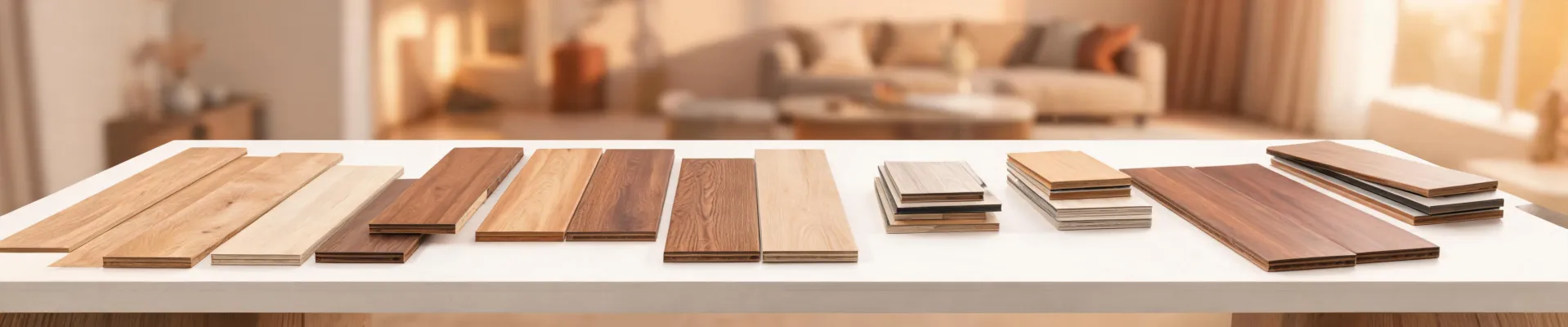
April 2024: The Bid That Looked Simple
In April 2024, I was the procurement manager at a 180-person renovation company. I had managed our flooring and finishes budget — about $1.4 million annually — for seven years, negotiated with 40+ vendors, and tracked every order in our cost system. When we won a 96-unit multifamily renovation, I thought the materials package would be a spreadsheet exercise. Shaw flooring. Shaw laminate floors. Bulk porcelain tile. Tile adhesive. A protective coating for the lobby concrete. How hard could it be?
Hard enough that I almost made a $46,000 mistake.
The First Quotes: Why Sticker Price Lied
We needed about 42,000 sq ft of unit flooring, 25,000 sq ft of bulk porcelain tile, 1,200 bags of tile adhesive, and 18,000 sq ft of protective coating. I sent the package to 11 vendors over six weeks. Four flooring suppliers, three tile distributors, two adhesive suppliers, and two coating manufacturers.
The first round was noisy. One online flooring quote came in at $2.05 per sq ft for a laminate that looked like Shaw laminate floors. A local Shaw distributor quoted $2.28 per sq ft for Shaw flooring. On paper, the online option saved about $9,660. Then I read the fine print. Freight damage was on us. Returns were not accepted. Warranty support was a phone number. The local distributor included delivery, a staging plan, and a rep who would walk the first 10 units with our installers.
Here's the thing: the lower price wasn't lower. It just moved the risk to us.
The bulk porcelain tile quote was worse. One national tile quote was $2.85 per sq ft. The local tile distributor quoted $3.10. I almost went with the national quote. Then I added the hidden stuff: $2,800 in pallet and liftgate fees, a 12% breakage allowance, and no returns for shade variation. Effective cost: about $3.42 per sq ft. The local distributor allowed 30-day returns and did batch matching. Effective cost: about $3.18. So the cheaper tile was actually 7% more expensive before a single tile hit the floor.
They missed it. Again.
The Tile Adhesive Problem
Tile adhesive is where the story turned. Our tile supplier offered a universal thinset at $18 per bag. The tile manufacturer's spec required a modified mortar meeting ANSI A118.15 for large-format porcelain on concrete. The approved adhesive was $24 per bag. Difference: $7,200 across 1,200 bags.
The upside was $7,200 in savings. The risk was a failed bond, cracked tile, and a tear-out. I kept asking myself: is $7,200 worth potentially a $46,000 redo and a missed punch list? I calculated the worst case: full bathroom tear-out in 24 units. Best case: it works and nobody notices. The expected value said maybe, but the downside felt catastrophic.
We bought the approved adhesive. Simple.
Per ANSI A118.4 and A118.15, tile adhesive selection depends on tile type, substrate, and exposure. The TCNA Handbook is the reference I use. Verify current editions at TCNA.
How to Evaluate Protective Coating Manufacturers When the Spec Is Thin
The protective coating was the fuzziest part. The spec said 'protective coating, lobby concrete.' That's it. Two manufacturers bid. One was $0.38 per sq ft. The other was $0.52. On 18,000 sq ft, the gap was $2,520 — not huge, but enough to matter.
I don't have hard data on industry-wide defect rates for protective coatings, but based on our 2024 orders, my sense is coating failures cluster around surface prep and curing, not the brand name. What I could compare was documentation.
The $0.38 manufacturer sent a one-page flyer. No current TDS. No SDS. No ASTM D4060 abrasion data. No VOC content. The $0.52 manufacturer sent a current TDS, SDS, ASTM D4060 abrasion results, ASTM D523 gloss data, and a local technical rep who would do a jobsite mockup. That's how I evaluate protective coating manufacturers now: not by the logo, but by the paperwork and the mockup.
In California, South Coast AQMD Rule 1113 limits VOC for industrial maintenance coatings. Verify current limits at SCAQMD. If you buy coatings in other states, check local air district rules too.
We paid for the mockup. It took half a day. It showed the cheap coating would likely need a second coat in our conditions. That changed the math.
The Turning Point: A TCO Spreadsheet, Not a Quote Sheet
By June 2024, I had 11 quotes and a headache. I built a total cost of ownership spreadsheet with five columns: product compliance, delivered cost, lead time, warranty support, and responsiveness. I weighted compliance and delivered cost highest. Then I forced every vendor into the same format.
What I mean is that the cheapest option isn't just about the sticker price — it's about the total cost including freight, returns, substrate prep, adhesive compatibility, labor time, punch-list risk, and the potential need for redos.
Look, I'm not saying the cheapest option is always bad. I'm saying it's riskier. And risk has a cost, even if it doesn't show up until month nine.
What We Actually Bought
We split the award.
- Unit flooring: Shaw flooring from the local distributor for most units. Shaw laminate floors for 42 units where install speed and replacement consistency mattered. We verified the laminate met CARB Phase 2 and TSCA Title VI formaldehyde limits. Verify current requirements at EPA and CARB.
- Bulk porcelain tile: The local tile distributor, even though the unit price was higher. Batch matching and returns were worth more than the headline savings.
- Tile adhesive: The tile manufacturer's approved modified mortar. No compromise.
- Protective coating: The manufacturer with ASTM D4060 and ASTM D523 data, current TDS/SDS, and a mockup. Not the cheapest. The one I could defend in a warranty claim.
Our boss wanted one vendor for everything. I showed him the low-bid path: about $25,000 in initial savings, but $46,000 in likely adhesive tear-out, $8,400 in tile breakage, and $12,000 in coating recoat risk. He stopped asking for one vendor.
Results and What I Learned
The project finished in Q4 2024. We spent $812,000 against a $780,000 materials budget. We were $32,000 over, mostly from unexpected substrate prep in 18 units. But we avoided the $46,000 tear-out and the coating recoat. I would make the same call again.
Bottom line: the low bid would probably have cost us more after rework, delays, and punch-list fights. The numbers are from our Q2 2024 bid files. Verify current pricing with vendors as of April 2026, because freight and resin costs have moved.
A Simple Vendor Scorecard
I still use this for every materials package:
- Compliance: Does the product meet the spec and the code? Ask for current TDS, SDS, and test reports.
- Delivered cost: Unit price plus freight, fees, returns, and expected breakage.
- Lead time: Not the quote lead time. The actual lead time from the last three orders.
- Warranty support: Who answers the phone when something fails?
- Responsiveness: How fast do they answer RFIs and send samples?
Standards I Now Check First
- Laminate flooring: CARB Phase 2 / TSCA Title VI for formaldehyde. Verify at EPA and CARB.
- Tile adhesive: ANSI A118.4 or A118.15, depending on tile and substrate. Verify with TCNA.
- Protective coatings: ASTM D4060 abrasion, ASTM D523 gloss, VOC content, and local air district rules. Verify at SCAQMD or your local agency.
- Shaw flooring and Shaw laminate floors: check the specific product spec sheet, not the showroom display. In my opinion, that's the only way to compare across brands.
If you ask me, the best procurement people are the ones who read the spec sheet, ask for the mockup, and build the TCO before they sign the PO. That's it.